More Book Club Stuff

owl bookplateI just can’t let the book club thing alone. That’s why you’ll find that little “comment” bubble to the right of the title above.

If you click on the comment bubble for my previous post on book clubs at McNally Robinson, you’ll find Richard Stecenko describing how reading the books prior to seeing three films this summer enriched his experience of the films.

A movie book club is a great idea. Read the book, then view the movie at the theatre; adjourn to your favourite watering hole after the movie to discuss. Has anybody tried it? Leave a reply to Richard’s comment.

In fact, what about the rest of you out there in the cyberland? Tell me about your club. How long have you been going? How do you choose your books? Do all your members work at the same place or have the same profession? Gender balance? Most important: what do you eat and drink at your meetings?

I moderate comments here, so you can tell me if you don’t want your name to appear with your comment.

Book Clubs at McNally Robinson

bookplate falling leaves The McNally Robinson Bookstore, being appropriately discreet, couldn’t help me prove my hypothesis that there are more book clubs per capita in Winnipeg than in any other city in Canada. But they do run three book clubs out of the store.

Facilitator Wendy MacDonald’s two book clubs—one in the afternoon and one in the evening—are offered through the store’s Community Classroom.

Books for 2014/2015 include Joseph Boyden’s Orenda, Graham Green’s The End of the Affair, and Based on a True Story by Elizabeth Renzetti.

Check these clubs out at http://www.mcnallyrobinson.com/classes#.VCHuqxYjySY

Phone: 204-475-0483, or by email: classroom@grant.mcnallyrobinson.ca

(As I post this, Wendy’s afternoon session is full, but there are still places available in the evening.)

But if, like me, you have commitment issues, Joanne Kelly’s book club could be right up your alley. You don’t have to actually “belong”. You can come for one meeting or every meeting. Joanne wasn’t sure that the concept would work. At the first meeting in 2011, she says,

“I was so nervous when I first started the book club that no one would show up. But the first meeting had about 20 women! I was thrilled (and relieved). Since then we have had anywhere from, say nine or 10 if the weather is bad, up to almost two dozen. There is a core group of women who have been there from the start, who have never missed a meeting, and people who come and go when they can.”

Joanne chooses the books for the club and pushes herself to select titles that stretch her own horizons.

“I don’t want to choose books from my list of favourites, or from my comfort zone. I do a lot of research, read a lot of reviews and browse a lot of bookshelves. I try for a mix of fiction and non-fiction and a mix of genres. Finding humorous books is the hardest.”

The club meets the last Tuesday of the month, and the book for October 2014 is Francisco Goldman’s, Say Her Name.

An interesting fact about Joanne’s club: the turnout is almost exclusively female. Doing an informal survey of my friend’s clubs, I find that women predominate. A question for another day.


More Book Clubs in Winnipeg?

I’m back in this space after a month of holidays.

I got an invitation just before I left to speak to the University Women’s Club’s mystery reading group in early December and it got me thinking about book clubs in general. I think Winnipeg has more book clubs per capita than any city in Canada. I’ve never belonged to one myself, but I have at least four friends who do and some of these clubs have been going for decades.

antique head bookplate single

Unlike so many other human endevours, book clubs seem to have staying power. Someone decides to have a few friends over to discuss the books they’re reading over a glass of wine. They have a good time. The same friends meet again the next month at someone else’s house. Friends bring other friends. Before you know it, they’re meeting every month, they’ve agreed on a method for selecting books, a format for meetings, and everyone takes a turn hosting. Friendship and thoughtful conversation warm those cold winter nights.

I asked the Winnipeg Public Library if they could help me prove my hypothesis. But librarian Danielle Pilon says the library has no way of gathering statistics on book clubs because most of them are private and make their own arrangements. But Ms. Pilon did tell me this:

“The Library itself runs 19 reading clubs in various branches (http://winnipegpublibrary.wordpress.com/book-clubs/) and we also loan our collection of more than 250 adult Book Club Kits (http://wpl.winnipeg.ca/library/libraryservices/bookclubkits.asp) to private book clubs. Those kits circulated 833 times in 2013, and each of those checkouts should reflect at least one book club meeting.”

Quite impressive, considering that number represents only those book clubs that borrow books from the library. And it doesn’t take into account individual book club members who simply borrow that month’s selected book from the library.

What about club members who buy books? Check out my next post about the book clubs run out of the McNally Robinson Bookstore.

Jim Blanchard’s War

Blanchard Great WarAug. 4 was the 100 year anniversary of Britain’s, and therefore Canada’s, declaration of War against Germany.

But how did it feel to go through that war in our own community? Many young men from Manitoba marched onto the troop trains in the fall of 1914–singing, cocky, even swaggering–and with absolutely no idea of what awaited them.

Jim Blanchard’s admirable book, Winnipeg’s Great War: A City Comes of Age tells us with thoroughness and restraint exactly what awaited them and how their parents and friends and the elites of the city reacted to the news from the front that was increasingly distressing after the first huge losses of April and May 1915.

First published in 2010, Blanchard’s book is receiving renewed attention because of the centennial. He weaves two separate strands together. The first is the participation of the Canadian military in the war with special emphasis on the regiments raised in Manitoba: the Fort Garry Horse, Lord Strathcona’s Horse, the Winnipeg Grenadiers, the Cameron Highlanders, the Winnipeg Rifles and others. The second strand follows the home front in Winnipeg as the realization sank in that the war would not be over by Christmas; that it would be hard fought and take years to resolve.

We have had a century to pour over the events of World War I. It would be hard to find anyone now who regards it as anything other than a catastrophe. Yet Blanchard shows that while the war was going on and well into the 1920s, Winnipeggers by and large supported the War and felt that victory had been worth the sacrifice.

Winnipeg’s business class funded regiments, raised millions of dollars, provided the first Returned Soldier’s Association in the country, and stoically waved their sons and daughters off to war. The book is particularly strong on the contribution made by women in those efforts and as nurses closer to the action. Yet the ample quotations from letters, diaries and newspaper reports are what really bring the war experience to a 21st century reader. Alec Waugh writes angrily from the front about his friends who are able-bodied but have not yet enlisted. A returned wounded man tells a newspaper reporter about the image of a particular German he shot, how that image repeats over and over in his mind. Private George Macleod, who lived the next street over from where I now live, is one of many listed as wounded from other familiar streets in a newspaper casualty list.

The book’s subtitle, “A City Comes of Age,” can be read several ways, as Blanchard surely intended. It was a hard and bitter coming of age, during which people simply had to hang on to the belief that their sacrifices were worthwhile or they could not have done the things necessary to bring the war to an end.

Winnipeg’s Great War: A City Comes of Age is available at McNally Robinson, Chapters and Amazon.ca


Catherine Hunter’s Crime Fiction

c_hunter_shadows burn

I had originally intended to write about Catherine Hunter’s mystery book set in Wolseley as the second post in my series on Winnipeg neighbourhoods through crime fiction. What neighbourhood revels more in its stereotypes and is riper for parody than Granola Heights, after all. Hunter certainly has some fun in The Dead of Midnight (2001), as members of a Wolseley book club are bumped off one by one, by means outlined in the series of mystery books the club has been reading.

But then I got a summer cold and spent a weekend on the couch, reading two other crime novels by Hunter. And I realized that although St. Boniface figures in both Where Shadows Burn (1999) and The First Early Days of My Death (2002), these three novels taken together do not fit into my neat little neighbourhood frame, nor are they very similar to each other. It’s as if they were written by three different writers. When you realize that she is best known as a poet, you begin to see that Hunter is using crime fiction to explore themes that are also threaded through her poetry.

Where Shadows Burn, was her first kick at crime fiction, and it is paranoia-inducing. By the climactic scene at the end of the book, the reader doesn’t trust any of the characters, including the lead character. That’s quite a trick. There is a ripping, hammer and tongs finish. Along the way Hunter uses the Orpheus and Eurydice myth to give a deeper resonance to themes of grief, loss, and regret. The story unfolds while a production of Hamlet is in its design and rehearsal stages, and this, besides giving theatre fans an interesting look backstage, adds the theme of inexorable revenge to the soup.

The image of a person floating above the world occurs both in the poetry and in the novels. In The First Early Days of My Death, a character floats above Winnipeg, descending to haunt the people she thinks have murdered her and desperately trying to alert her loved ones as to the identity of the guilty party. There is a dreamy, surreal quality to the writing, much like those paintings of Chagall, where two lovers, totally taken up with each other, float lazily above villages and farms. Winnipeg, in this book, appears as, “the exact, geographical centre of coincidence,” where the Assiniboine and Red rivers, having an entire continent in which to avoid running into each other, nevertheless do collide, making Winnipeg a place where other unlikely events can happen, too.

I haven’t yet read Hunter’s fourth, and so far last, crime novel, Queen of Diamonds (2006), but since its main character is a medium, Hunter once again seems to be testing that, perhaps, porous barrier between the living and the dead.

Catherine Hunter teaches English at the University of Winnipeg and has published four poetry collections. Of these, Latent Heat won the Manitoba Book of the Year award in 1999. She has also recorded Rush Hour, a spoken word cd.

Mid-century Modern

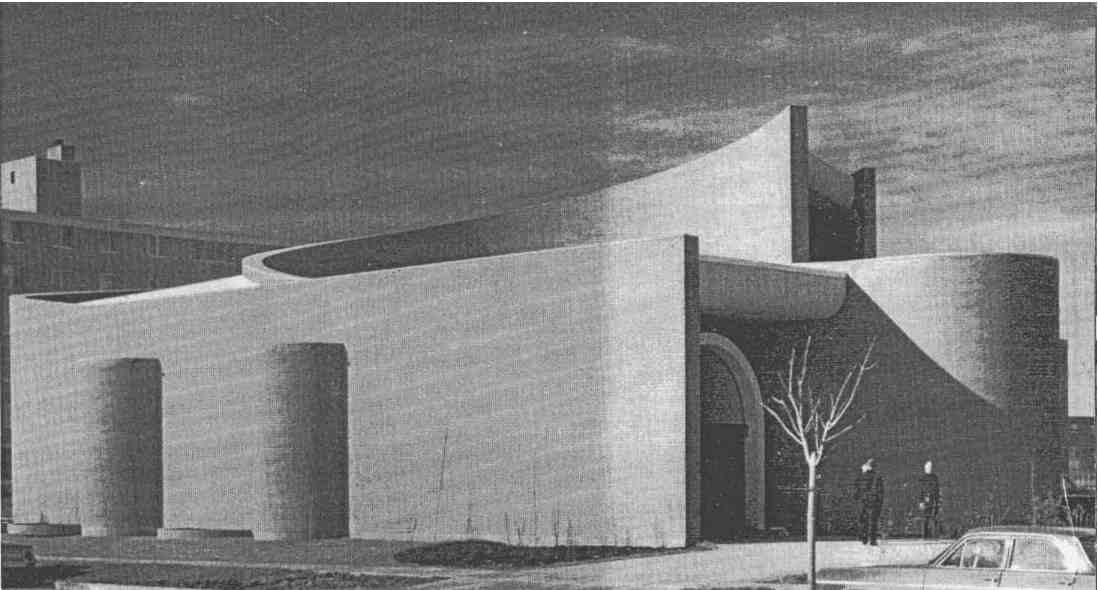
St. John Brebeuf Church 1966 Libling Michener_picleft: St. John Brebeuf Church, Winnipeg, Libling Michener & Associates, architects, 1966. Photo courtesy Canadian Architect Yearbook, 1966.

The original reason for this post was to announce that the fine folks at the Winnipeg Architecture Foundation have made the full text of my 2005 book, Making a Place: A History of Landscape Architects and Landscape Architecture in Manitoba available as a pdf online at their website. (It was originally published by the Manitoba Association of Landscape Architects exclusively as a cd-rom.) See link below.

http://www.winnipegarchitecture.ca/wp-content/uploads/2012/09/Making-a-Place.pdf

But there is so much more on WAF site that is of interest for fans of Winnipeg architecture of the modern period, 1945-1975. There are biographies of important Winnipeg architects of that period, profile pages on buildings themselves—not just the usual suspects, but other more modest houses, commercial and public buildings. You can buy self-guiding tour brochures for Winnipeg Brutalist architecture; or the modernist buildings of both the University of Manitoba and the University of Winnipeg; or modernist Broadway. You can even show your love of Winnipeg mid-century modern by buying handsome buttons depicting, for example, Étienne Gaboury’s wonderful Precious Blood Roman Catholic Church.

Check out their site at: http://www.winnipegarchitecture.ca/

Like them on Facebook and consider making a donation.

See their exhibit, “University of Manitoba Modern Architecture” in the main floor exhibit cases at the Millennium Library until July 31, 2014.

Take in their free Terra Cotta Architecture tour on July 12, 2014, http://www.winnipegarchitecture.ca/terra-cotta-architecture-tour/

John K Samson’s World

Johnksamson_Provincial

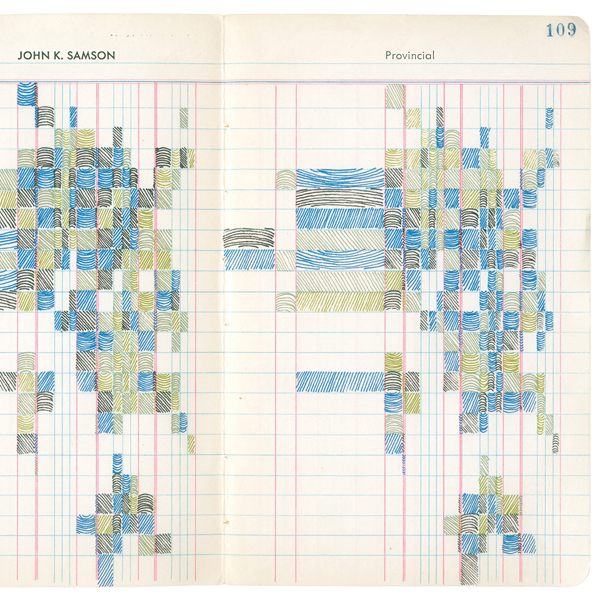
Some people might think that a blog that is essentially about artistic representations of Winnipeg is too tiny a window onto the big world. My answer to that is two and a bit words: John K Samson. His album, Provincial—with its references to cruise night, the old army navy store, an all night restaurant in North Kildonan, the Ninette Sanatorium—is rooted, you might even say stuck, in the geography of Winnipeg and of the highways that radiate outward from or converge on Winnipeg (depending on your point of view). Yet it also contains worlds of feeling that can move you whether you are from Hoboken or Lviv or Chengdu. The line between poetry and song, if there ever was one, disappears with Samson. The songs are beautifully crafted but you need to read them as poems too in order not to miss the clever, quirky, unexpected imagery. Fortunately, that’s easy, because every copy of Provincial comes with a book of the poems. In fact, the package includes a vinyl album, a cd and the volume of poetry. That’s something you’ll miss if you just download the album. And if you haven’t listened to Provincial or any of Samson’s work with the Weakerthans, you’re missing out on something fine.

Here’s Samson singing, “Letter in Icelandic from the Ninette San”. (The Ninette Sanatorium was a hospital for the treatment of tuberculosis patients located in the town of Ninette in southwestern Manitoba.)

And here is a lecture on John K Samson’s poetry by Nick Mount at the University of Toronto

John K Samson’s website.

http://johnksamson.com/


Photography in a Box

Since photography figures in the action of Put on the Armour of Light, and since the book is set in Winnipeg in 1899, I was fascinated to read that a set of 31 glass negatives dating from that period had surfaced in the Free Press photo archive room.

See the story from the June 14, 2014 issue of the Winnipeg Free Press and a slideshow of the photographs here:

http://www.winnipegfreepress.com/multimedia/pov/A-glass-menagerie-263115951.html

The Vive box camera, which produced these photographs, was manufactured in Chicago, likely in 1897, and represents one of the earliest attempts to put photography into the hands of ordinary people, even those with little money. It pre-dated its more famous cousin, the Eastman Kodak Brownie, which was not on the market until 1900.

For $5, people who bought the Vive box camera had a portable means of recording their everyday experiences quickly and easily, a capacity that was remarkable then, though we take it for granted now. (But the Vive was not as cheap as the Brownie, which sold for $1, perhaps one reason why the Brownie survived and the Vive didn’t.)

What is special about these particular images is how informal they are compared to most of the photographs that date from this period. Many of the images that have made their way into archival collections are formal portraits from commercial photographers. The sitters look stiff and serious in these studio pictures because they had to remain absolutely still while the camera aperture was open, often as long as 30 seconds. Outdoor photography was easier because of abundant light. But many people still felt that having their picture taken was a serious business.

Contrast that with the spontaneous feel of this photo:

Freep smith16 b

Above: no. 16, E J C Smith collection, courtesy of the Winnipeg Free Press

These guys are clearly having fun and are captured in the moment. People were starting to figure out what could be done with a camera.

My thanks to the Winnipeg Free Press for permission to reproduce this photograph.


Allan Levine’s North End

This is the first in a series of posts touring Winnipeg neighbourhoods through crime fiction.

Levene bolshev

Winnipeg writer Allan Levine had a history Ph. D under his belt, a day job, and a promising freelance writing career when he decided to write a mystery novel, The Blood Libel, set in turn of the century North End Winnipeg. It was 1997 and there were almost no other Winnipeg mysteries in bookstores, so Levine was a pioneer of sorts. He wrote two more books featuring his North End hero, Sam Klein: Sins of the Suffragette, and The Bolshevik’s Revenge before turning to New York City for the setting of his, so far, last mystery novel, Evil of the Age. Meanwhile, Levine’s non-fiction books have been praised both for their readability and their erudition. His most recent, a biography of Mackenzie King, won the Alexander Kennedy Isbister award for Non-fiction in 2012.

Allan Levine kindly agreed to do an interview with me. His Sam Klein books are available as e-books at Amazon.com and you can find him on the web at http://www.allanlevinebooks.com/index.html

CM: Prior to publishing your first Sam Klein mystery, The Blood Libel, in 1997, you had written mostly political history and been successful at that. What made you want to write a mystery novel?

AL: I had always wanted to try writing fiction and was looking for new creative writing opportunities. I had no intention of attempting to write a serious novel, but historical mysteries, of which I had read many, did appeal to me. At first, I approached The Blood Libel like a non-fiction book and did a lot of research amassing the historical details that are necessary to bring the time period to life—including all of the mundane aspects of daily life that few of us really think about yet can enrich a work of fiction. I later learned that serious readers of historical mysteries pay close attention to this. When I started, I knew the basic outline of the story—and, in fact, purposely set the book in 1911 when a real blood libel trial took place in Russia–who committed the murder and why. But much of the rest of the plot and characters were developed as I wrote. In later novels, I mapped out the entire story ahead of time and found that approach much more effective. The one thing I did want to do was name the two major characters, Sam and Sarah, after my two maternal grandparents.

CM: When The Blood Libel was first published there were almost no mystery novels set in Winnipeg. When you approached publishers, were they receptive to a book set in Winnipeg?

AL: That was not much of an issue because at the time I was working on another project with Greg Shilliday of Great Plains Publishers in Winnipeg that dealt with Manitoba history. He and I discussed the idea and decided that a mystery set in Winnipeg at the turn of the century during an immigration boom could be just as successful as one set in New York City’s Lower East Side. Hence, I did not have to shop the concept around to other publishers. Interestingly enough, the Winnipeg historical setting proved to be a feature of the book that reviewers and readers liked, and that included in Germany when The Blood Libel and the Sins of the Suffragette, the second in the trilogy, were published there. German readers found Winnipeg’s immigrant history quite fascinating and exotic.

CM: The old North End is no longer the centre of the Winnipeg Jewish community in the way that it was in Sam Klein’s time. What role, if any, did nostalgia play in your creation of the setting in the Sam Klein books?

AL: I had researched and written about Winnipeg and the North End, prior to The Blood Libel. It is important to write about a period and setting that you are knowledgeable about, especially when doing historical fiction. It made sense to me to make Sam Klein a Jewish immigrant and integrate the various issues around Winnipeg’s small but growing Jewish community as well as the urban problems created by the influx of non-Anglo newcomers. Prejudice and discrimination were endemic in Winnipeg and Canada well into the twentieth century and I made a point of dealing with this through the characters in the book. I don’t know if this was in any way a nostalgic consideration as much as being interested in the world my grandparents grew up in.

CM: Are you finished with Sam Klein?

AL: Good question. The last Sam Klein novel, The Bolshevik’s Revenge was published more than a decade ago. For a variety of reasons, I decided to stop and later wrote a fourth mystery, Evil of the Age, set in mid-nineteenth century New York. After that, I became involved in several big non-fiction projects and still am. My next book being published this September is Toronto: Biography of a City, a three-year undertaking that examines the growth of Toronto from a provincial town to Canada’s largest city. Though I did live in Toronto many years ago as a graduate student, it will be interesting to see how a book about the city by a Winnipegger is received.

I would add that I do have another Sam Klein mystery in my head that takes place in the 1920s, so who knows….

Jazz in Winnipeg

Image

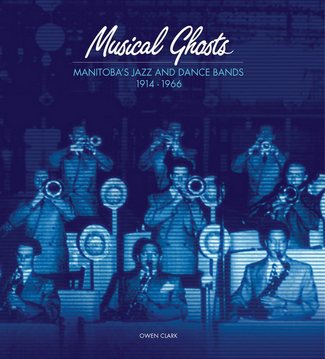
Since the Winnipeg International Jazz Festival kicked off this week, I wanted to recommend an appropriate book. Owen Clark’s Musical Ghosts; Manitoba’s Jazz and Dance Bands, 1914-1966 is one of the few books available that describes Winnipeg’s lively popular music scene before the advent of rock and roll.

Owen Clark was able to make a living as a Winnipeg based jazz and pop drummer during the 1950s and early 1960s. When musical tastes changed after the boomers fell for rock and roll, the clubs and dancehalls that he had played in either closed or converted to the new music. Clark subsequently turned to teaching and continued to play on the side. But while he was gigging, he was gathering photographs and memorabilia which now form one of the most important archival collections documenting Winnipeg popular music. It took Clark fifteen years to assemble his material, write and publish his book.

The result is a unique look by an insider at the bands, musicians, bandleaders and singers who played in the numerous clubs, dancehalls and pavilions around the city and in the beach resort towns nearby. The organizing principle is also unusual. Clark walks his reader down a street and “visits” each club or dancehall on that particular street.

Unfortunately, the book, which came out in 2008, is now sold out. But you can get it at the Winnipeg Public Library. There may also be a copy at one of the second hand booksellers in town.

Or you can take a look at Owen Clark’s extensive collection of photographs and documentation, which he deposited in the City of Winnipeg Archives. It’s best to make an appointment before going to the archives, which you can do by phoning 204-986-5325 or emailing; archives@winnipeg.ca.

The city archives also has webpage at: http://winnipeg.ca/clerks/toc/archives.stm

Owen Clark continues to play professionally. You can get in touch with him here: http://www.clarkproductions.mb.ca/about.html